The Sports Industry Has an Innovation Theater Problem (And We Have Receipts)
- Czarnowski Collective

- Feb 26
- 3 min read
Insights and observations contributed by Susie Sapp and Laurent Huttinot, Czarnowski Collective.
We just got back from Sports Business Journal's National Sports Forum. The room was full of smart people, strong opinions, and enough buzzwords to fill a stadium. But underneath all the noise, one tension kept surfacing — and it's one we think about every single day:
Are you actually creating an experience fans value? Or are you just playing like you are?
Here's the thing nobody wants to say out loud: sport is no longer competing against the rival team. It's competing against everything: The couch. The streamer. The perfectly algorithmic content feed that never asks you to pay for parking.
The bar for "worth it" has never been higher — and a lot of what's getting labeled as such isn't clearing it. There's a name for that. It's called innovation theater. And NSF made clear it's everywhere.

What Innovation Theater Actually Looks Like
You know it when you see it. Monetization-first thinking dressed up as fan engagement. Premium inventory stacked on top of a mediocre base experience. "Fan-first" messaging that evaporates the second someone pulls up the ROI spreadsheet.
Then there are the random tactics — disconnected activations with no emotional throughline, no narrative, no focal point. They look busy. They don't build momentum. As one voice at NSF put it plainly: random tactics equal random results.
The legacy model asked: “how many seats can we fill?” Today's leaders are asking: “would they come back, and would they bring a friend?” Those aren't the same question. Designing for the second one changes everything.
Where the Industry Is Actually Winning
1. Fans first. Viral second. Monetization third.
The Savannah Bananas. Barstool Sports. Darts. TGL. What do these wildly different properties have in common? They started with absolute clarity on audience, voice, and intent — then designed for emotion and shareability. Not the other way around. Fan-first only works if you commit to it all the way down, even when it's uncomfortable.

2. Designed growth, not accidental growth.
Growth doesn't just happen. It's engineered. The NFL x Bad Bunny collaboration wasn't about slapping a celebrity on a broadcast — it was an intentional cultural collision, built to reach a specific audience in a specific way. That's the difference between strategy and decoration.

3. Expanding the "drip-line."
The smartest teams aren't thinking about a 2-hour game window anymore. Mixed-use entertainment ecosystems — think KC Power & Light — extend the revenue window, deepen sponsor visibility, and build community identity that outlasts the final whistle. Sponsors love these environments because engagement doesn't depend on what's happening on the scoreboard.

4. Brand authenticity as the actual growth engine.
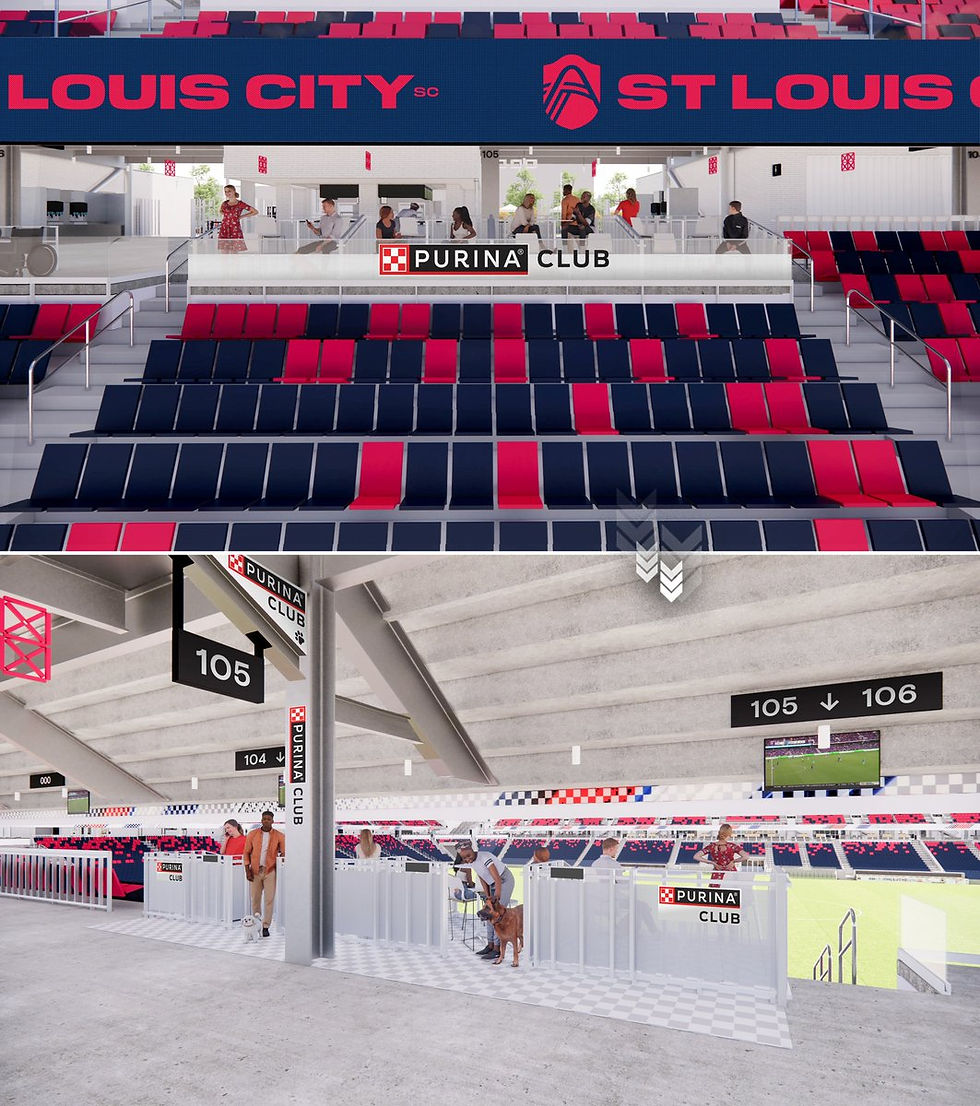
Here's our favorite case study from NSF: Purina. Yes, the pet food company. They built a local partnership with St. Louis City SC anchored entirely around what's authentic to their brand — pets — and watched it grow into a national relationship with U.S. Soccer. No gimmicks. No scope creep. Just radical authenticity at scale.
5. Walk the deck.
One of the most repeated refrains at NSF was the simplest: be present. You can't optimize what you haven't physically experienced. Fresh eyes and real presence lead to better strategy, full stop. Here's an example: A DJ near Fenway Park noticed his crowd left every night at 11:45pm to catch the last commuter train. His solution? Play nothing but hits between 11:25pm and midnight — then drop "Shots" at 12:05am. Nobody left. Bar revenue jumped 20% on the nights he played. This isn’t a budget hack. This is proof that experience isn't about scale…it's about taking notice and acting with intention.
For the Highlight Reel
The bottom line from NSF is one we'd stake our work on: experience is no longer a marketing output. It's a growth system. The brands winning aren't chasing innovation headlines — they're engineering emotion, managing momentum, and pulling partners into the experience rather than selling around it.
It's a distinction that's easy to talk about and hard to execute. We happen to think that's exactly where the interesting work lives. If you agree we should chat. Drop us a line here. 👇

